


The programmatic industry has spent two decades nurturing and normalising a fractured ecosystem. Publishers have been forced to jerry-rig siloed solutions into a “Frankenstack” of tech that was never designed to work together.
While this fragmentation serves the interests of vendors, it actively undermines the strategy of the publisher. Moving into 2026, the industry is presented with a choice between a broken status quo or adopt a unified infrastructure.
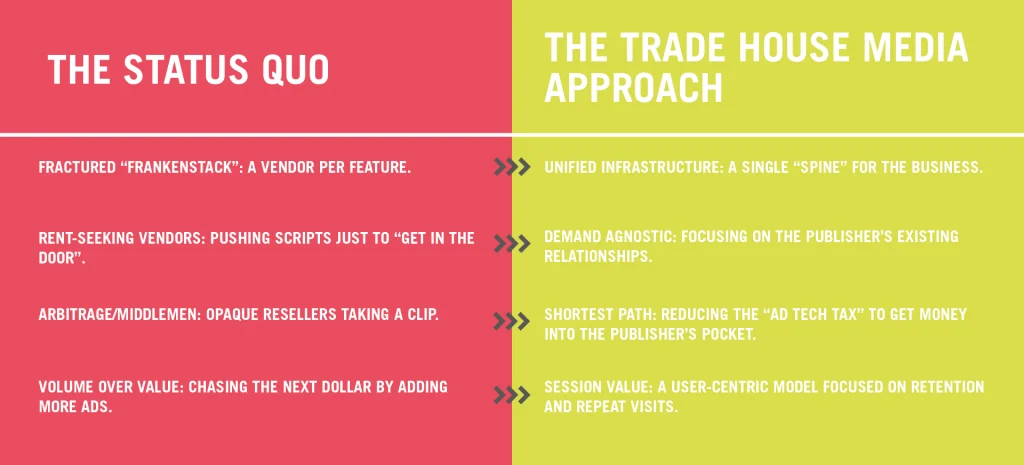
THE TRUE COST OF A FRACTURED PROGRAMMATIC ECOSYSTEM
Operating a fragmented stack is a direct drain on revenue. When a publisher’s technology is managed in isolation, the systems simply don’t work.
THE RENT-SEEKING VENDOR PROBLEM
The current market is filled with rent-seeking vendors whose primary goal is to get their script on your page. These partners often over-promise on revenue estimates to secure a spot in your stack, but they rarely look at the ecosystem top-down. They solve for their own product, not your business.
THE MIDDLEMEN TAKE THEIR CLIP
Ad spend starts with an advertiser, but it often passes through a dozen middlemen before reaching the publisher. Each player takes a “clip,” resulting in a massive “ad tech tax” where only a fraction of the original pound makes it to the actual media owner.
VOLUME OVER VALUE
When publishers feel the financial squeeze, they often react by adding more ad units and refreshing ads more frequently. This creates a market bazaar experience that frustrates users and leads to a slow devaluation of the inventory. Advertisers have the technology to identify these stuffed sites and will eventually optimise their spend away from them.
A BETTER WAY: THE TRADE HOUSE MEDIA APPROACH
We believe a publisher’s ad business should function like a single, high-performance machine rather than a collection of disparate parts.
- Unified Infrastructure: Instead of multiple mechanics maintaining different pieces of a bus, publishers need a central “spine” or nervous system that connects and controls every moving part.
- Demand Agnosticism: Technology should be a neutral architect. By remaining demand agnostic, the focus stays on making the publisher’s business profitable using their existing relationships, rather than favoring a specific biased marketplace.
- The Shortest Path: The goal is to create the shortest possible route from the advertiser’s pocket to the publisher’s pocket, removing unnecessary middlemen.
- Session Value: Instead of chasing individual clicks, we focus on a user-centric model. By balancing user experience with commercial profitability, publishers can drive retention and repeat visits, the only sustainable way to grow an audience in an AI-driven search landscape.
INTRODUCING TRADECORE
Tradecore was built to be the linchpin that brings these fractured pieces together. It provides a single source of truth for your data and a unified decision engine that allows you to own your technology rather than “renting” your real estate to third parties.
The status quo says that ad tech must be fractured and broken. Over a decade of evidence at Trade House Media says otherwise.